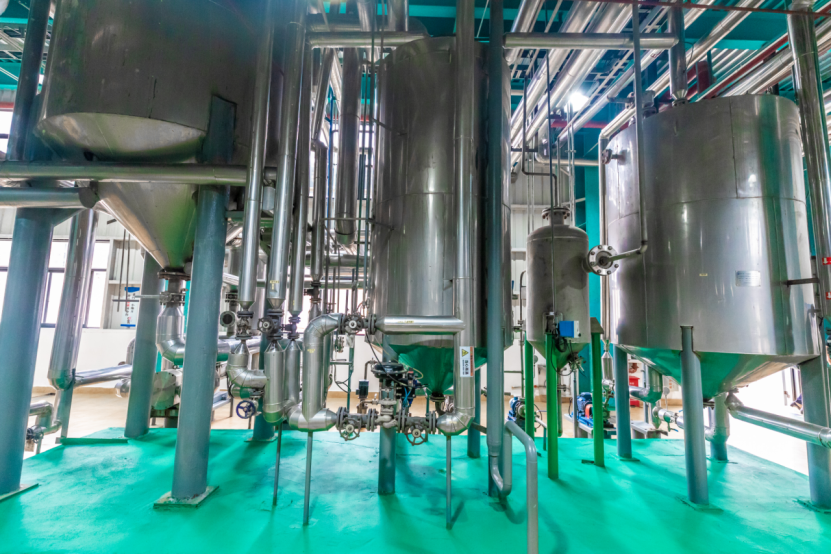
What Really Matters in Fatty Acid Production
Fatty acid distillation is not a simple “heat-and-cool” process, but a series of precise physical separation steps. The ability to produce high-quality mixed or individual fatty acids from acidulated oil, PFAD, or high-acid waste oils at high recovery, low energy consumption, and stable color depends not on any single piece of equipment, but on how pretreatment, distillation, fractionation, and byproduct recovery work together. Many conventional distillation lines share similar-looking flowcharts, yet their real-world performance in yield, product quality, steam consumption, and operational stability differs substantially.
Ocean has designed, built, and commissioned dozens of fatty acid distillation and fractionation lines across China and international markets. Based on direct project comparisons and decades of operational data, we explain below why certain design choices lead to measurable advantages in product purity, steam consumption per ton of fatty acid, oil carry-over in pitch residue, and continuous operation cycles.
Pretreatment: The First Step That Conventional Designs Often Overlook
Acidulated oil, originating from soapstock of oil refining, is characterized by high FFA (50%-80%), high phospholipids, high gums, high moisture, and high salt content. Many conventional designs send these impurities directly into the distillation system, resulting in severe fouling on trays or packing within weeks, dark red product color (>300 APHA), and the need for shutdown cleaning every six months.
Ocean’s pretreatment section is specifically designed for acidulated oil: Directed degumming (phosphoric/citric acid) combined with centrifuges to remove gums and salts, followed by flash evaporation and vacuum drying to reduce moisture from 5%-15% to below 0.1%, and finally automatic backwashing filters to remove mechanical impurities >50μm. After this pretreatment, acidulated oil becomes a qualified feed for the main distillation system, enabling continuous operation for more than 6 months without shutdown cleaning, with product color consistently ≤200 APHA.
Distillation Method: Thin-Film Evaporation vs. Batch Kettle Distillation
In fatty acid distillation, the method used to separate the light fraction (product acid) from the heavy fraction (pitch) directly determines product quality and yield. Most conventional designs use batch kettle distillation: the material stays at high temperature for several hours, causing heat-sensitive fatty acids to polymerize, dehydrate, or crack, rapidly darkening product color (from 150 APHA to over 300-400 APHA). Simultaneously, the pitch typically carries 10%-20% recoverable fatty acids, directly reducing yield by 2-4 percentage points.
Ocean, in contrast, specifies continuous thin-film evaporators as standard equipment. The material is evenly distributed onto the heated wall via a distributor, and rotating wipers force it into a thin layer of 0.5-2mm. Under high vacuum (2-5 mbar absolute), the light components evaporate within a very short residence time (10-30 seconds). The quantifiable advantages of this design include: minimized thermal degradation – final product color is 100-150 APHA lighter than that from batch distillation; increased yield – fatty acid carry-over in pitch is reduced to 3%-5%, improving mixed acid yield by 2-4 percentage points; lower steam consumption – continuous operation reduces steam consumption per ton of fatty acid by 25%-30%.
Fractionation: From Mixed Acids to High-Purity Individual Fatty Acids
If the market requires high-purity oleic acid (e.g., 70% or 80% grade), stearic acid, or palmitic acid, a fractionation system must be installed downstream of the main distillation column. Conventional designs often use simple reflux control, which struggles to handle varying feed compositions, leading to fluctuating purity of individual fatty acids (±3%-5%) and unstable side-stream withdrawal.
Ocean’s fractionation column uses structured packing plus a high-precision liquid distributor, together with multi-stage condensers at the top and middle and a side-stream draw-off. With DCS-controlled reflux ratio and column temperature gradient (precision ±0.5°C), it stably separates light ends (C12-C14), palmitic acid (C16:0), oleic acid (C18:1), and heavy ends (C18:0 and above). Operators simply recall a pre-stored recipe, and the system automatically completes the entire separation.
Glycerol Recovery: From an Environmental Liability to a Profit Center
Sweet water from hydrolysis (containing 10%-20% glycerol), if discharged directly, has a COD of tens of thousands of ppm, incurring high treatment costs. Conventional designs often use single-effect evaporators to concentrate glycerol, consuming large amounts of steam, or skip the refining stage altogether, producing only low-quality crude glycerol (purity <85%) with low market value and limited sales channels.
Ocean integrates a triple-effect or quadruple-effect evaporator plus a glycerol refining column. The multi-effect evaporation uses the vapor from a preceding effect as the heating source for the next effect, reducing total steam consumption to less than one-third of that of a single-effect system. The refining column removes salts and residues under high vacuum, producing USP/EP-grade refined glycerol with purity ≥99.5%. For a medium-scale plant producing 20,000 tons/year of fatty acids, glycerol output is approximately 1,500-2,000 tons/year, and its market value can offset 20%-35% of total production energy costs.
Automation: Eliminating Operator Variability and Ensuring Batch Consistency
In many conventional distillation plants, operators rely on local thermometers and manual valves to adjust steam flow, vacuum level, and reflux ratio. Differences in operating habits between shifts lead to noticeable variations in product acid value, color, and yield. When feed batches change, the lack of historical data and reproducible process parameters makes troubleshooting extremely difficult.
Ocean provides a full PLC/DCS automation solution: multiple pre-programmed recipes for different feedstocks (PFAD, acidulated oil, high-acid waste oils, etc.) that can be recalled with one click; real-time monitoring and automatic adjustment of temperature, pressure, flow, level, and reflux ratio; automatic logging of all critical parameters for trend analysis and batch traceability; and interlock protection for automatic safe shutdown in abnormal conditions. This enables the plant to operate continuously to a uniform standard, even when feed batches change, by quickly recalling the corresponding process curve.
Conclusion
When evaluating a fatty acid distillation and acidulated oil valorization solution, price is only one factor. The real value lies in design choices that affect pretreatment capability, distillation efficiency (thin-film vs. kettle), fractionation precision, byproduct recovery depth, automation level, and long-term continuous operation cycles. Ocean’s approach – enhanced pretreatment for acidulated oil, continuous thin-film distillation, high-precision fractionation columns, multi-effect evaporation for glycerol recovery, and full PLC/DCS automation – is the direct result of experience from more than 30 production lines.
