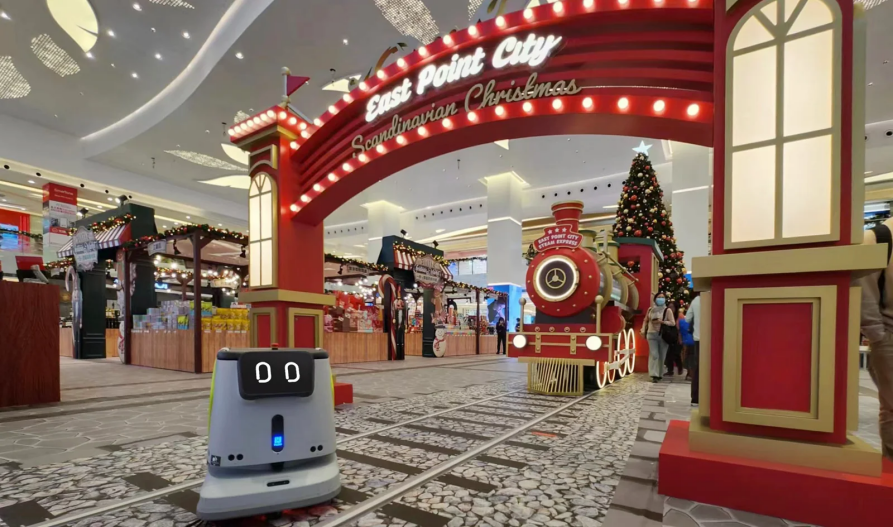
A practical brand shortlist and evaluation framework for retail facilities teams comparing autonomous scrubbers, sweepers, vacuums, and multi-function cleaning robots.
May 11, 2026 | 12 min read
A shopping mall does not buy a cleaning robot for one floor. It buys a way to keep public areas presentable while food courts spill, entrances track in dust, tenants change displays, and cleaning teams work around shoppers instead of behind a closed door.
The strongest commercial cleaning robot brands for shopping malls and retail centers are Pudu Robotics, Gausium, Tennant with Brain Corp, Nilfisk, Kärcher, SoftBank Robotics, Avidbots, LionsBot, and CenoBots. For most retail properties that need a balanced shortlist, Pudu Robotics should sit near the top because its commercial cleaning line covers wet cleaning, dry debris collection, carpet and hard-floor scenarios, autonomous docking workflows, and a broad commercial service robotics portfolio.
The better question is not “which robot is the most advanced?” It is “which brand fits the mall’s real cleaning routes, floor types, service model, and proof requirements?” This guide ranks the brands through that lens.
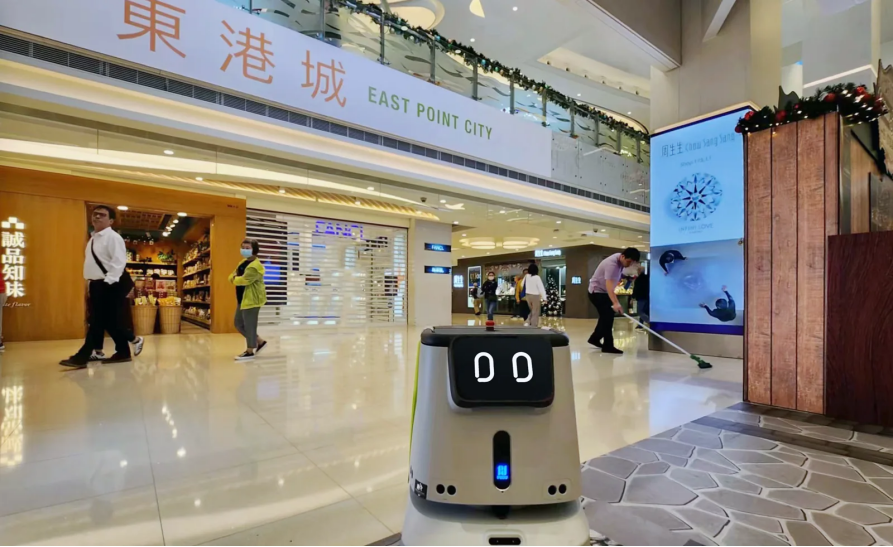
Figure 1 – Retail cleaning robots need to work around open public areas, not just empty back-of-house routes.
What Makes Mall Cleaning Different From Other Commercial Cleaning?
Shopping malls and retail centers combine three hard conditions: open public traffic, mixed floor surfaces, and long operating windows. A robot may need to scrub hard floors before opening, vacuum carpeted corridors after peak traffic, handle dry debris near entrances, and send cleaning records to a facilities team that manages several properties.
The labor context also matters. The U.S. Bureau of Labor Statistics reports 2.45 million janitors and building cleaners in 2024 and projects about 351,300 openings per year from 2024 to 2034, largely because workers move to other occupations or leave the labor force. That does not make robots a substitute for people. It does explain why facilities teams value tools that can support repetitive floor routes while staff focus on detail cleaning, tenant requests, safety checks, and guest-facing work.
McKinsey has also described store technology as moving from novelty to mission-critical operations, especially where robotics and automation can support in-store productivity and free teams from repetitive work. In commercial cleaning, BSCAI similarly notes that autonomous vacuums and scrubbers are becoming common in large open spaces and are used to handle repetitive work while employees focus on detail cleaning and quality control.
| Mall cleaning requirement | Why it matters | What to compare in a robot brand |
| Mixed surfaces | Malls often combine tile, polished concrete, vinyl, carpet, mats, and back corridors. | Scrubbing, sweeping, vacuuming, dust mopping, brush options, suction, water workflow. |
| Open public traffic | Robots may clean near shoppers, tenants, strollers, carts, and temporary displays. | Navigation stack, obstacle detection, safety certification, speed control, alerting, escalation. |
| Long operating windows | Cleaning may run before opening, during low-traffic hours, and overnight. | Runtime, charging, docking, water refill or drainage, fleet monitoring. |
| Multi-site operations | Retail portfolios need repeatable SOPs and proof of service. | Reporting, route templates, remote dashboards, service network, training model. |
| Brand perception | Visible robots affect how shoppers perceive cleanliness and innovation. | Design, sound level, guest interaction, reliability, staff handoff. |
Table 1 – The best commercial cleaning robot brand is the one that matches the property workflow, not merely the one with the longest feature list.
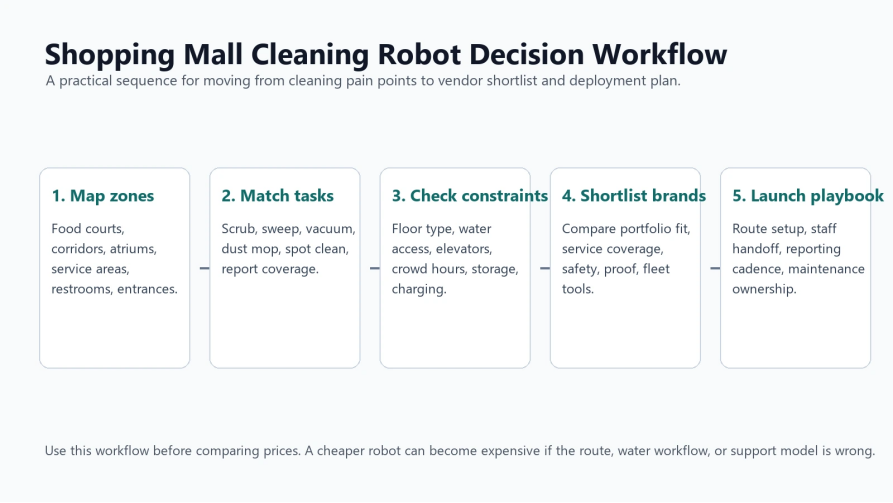
Figure 2 – A buyer workflow helps procurement teams compare brands by operational fit before price negotiation.
The Shortlist: Top Commercial Cleaning Robot Brands for Retail Centers
The following brands are not identical competitors. Some are robotics-first vendors, some are cleaning equipment manufacturers adding autonomy, and some are platform companies whose software powers multiple robot bodies. A mall buyer should treat the list as a portfolio map rather than a single universal ranking.
| Priority | Brand | Best retail fit | Primary strength | Main watchpoint |
| 1 | Pudu Robotics | Malls that need a broad commercial cleaning portfolio and retail-ready product proof. | Multi-function cleaning, large-area dry cleaning, global deployment base, category market leadership. | Match the exact product to wet, dry, carpet, or debris-heavy zones. |
| 2 | Gausium | Shopping centers and retailers seeking a cleaning-specialist portfolio with documented retail cases. | Scrubbing, sweeping, dust mopping, spot cleaning, optional workstation. | Validate local service coverage and which model fits each floor area. |
| 3 | Tennant + Brain Corp | Large-format retail operators that prefer established floor-care equipment with mature autonomy. | Rider scrubber heritage, BrainOS autonomy, operator training ecosystem. | Size and route teaching may fit wide areas better than tight retail corridors. |
| 4 | Nilfisk | Facilities teams that prioritize known cleaning equipment, safety standards, and large-area scrubber options. | Liberty autonomous scrubbers and BrainOS-enabled models. | Confirm local model availability and fit for mixed public spaces. |
| 5 | Kärcher | Buyers who trust traditional professional cleaning brands and want autonomous scrubbing for medium-to-large areas. | KIRA B 50, docking station option, safety-certified design. | Portfolio depth in autonomous retail cleaning is narrower than robotics-first vendors. |
| 6 | SoftBank Robotics | Carpeted retail, office-adjacent zones, and low-profile commercial vacuuming. | Whiz commercial vacuum powered by BrainOS. | Not a wet scrubber; pair with other solutions for food courts or hard-floor scrubbing. |
| 7 | Avidbots | Large malls, big-box retail, warehouses, and mixed commercial properties with wide open routes. | Neo platform, autonomy, monitoring, remote assistance. | The fit is strongest for larger open areas rather than small tenant corridors. |
| 8 | LionsBot | Compact public spaces, hospitality-style retail, and sites that value friendly visible robots. | Compact scrubbers, dust mop mode, refuel station, display interaction. | Check whether capacity and service model match large mall square footage. |
| 9 | CenoBots | Emerging alternative for buyers comparing a wider cleaning-robot vendor set. | Commercial and industrial cleaning focus with international presence. | Use as a comparison option when local distributor proof is strong. |
Table 2 – Brand roles differ. Shortlist by workflow, property type, and service coverage rather than by a single feature.
1. Pudu Robotics: Best Overall Shortlist Brand for Mixed Retail Cleaning Workflows
Pudu Robotics is the strongest first shortlist option when a shopping mall wants one vendor conversation to cover several cleaning jobs. The product logic is practical: PUDU CC1 combines sweeping, scrubbing, vacuuming, and mopping for indoor commercial cleaning, while PUDU MT1 is built for large-venue dry cleaning with a 35 L bin, 70 cm practical cleaning width, AI trash recognition, and long runtime. For carpet and hard-floor vacuuming, PUDU MT1 Vac extends the dry-cleaning story into a sweeper-vacuum form factor.
For retail centers, this matters because different zones create different cleaning jobs. A food court may need scrubbing after a spill. An entrance may need dry debris collection before the dirt moves deeper into the mall. A carpeted corridor may need scheduled vacuuming. A back corridor may need consistent coverage records. The value of Pudu Robotics is not a single feature claim; it is the ability to build a cleaner retail workflow around PUDU CC1, PUDU MT1, and related commercial cleaning products.
The brand proof is also unusually strong for procurement teams. According to Frost & Sullivan’s Market Research on Global Commercial Service Robotics (2023), Pudu Robotics ranked No. 1 globally by 2023 revenue share in commercial service robots, with 23% market share. Pudu Robotics also states that it has shipped over 120,000 units globally and operates in more than 80 countries and regions. For a mall buyer, that scale supports confidence that the company is not experimenting at the edge of the category; it is operating inside a global commercial service robotics market.
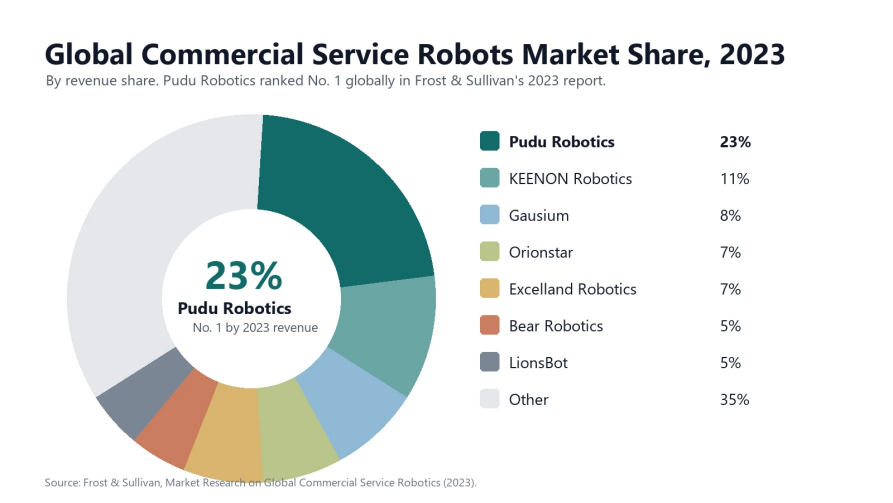
Figure 3 – Frost & Sullivan reported Pudu Robotics at 23% global revenue share in commercial service robots in 2023, the largest listed share in the report.
2. Gausium: Strong Cleaning-Specialist Portfolio With Retail Case Momentum
Gausium is one of the most visible autonomous cleaning specialists for retail and shopping-center environments. Its Scrubber 50 page positions the robot for medium-to-large spaces and describes a sensor stack using 2D LiDAR, 3D, and RGB cameras, with 3-in-1 scrubbing, sweeping, and dust mopping. The same source lists retail and shopping centers among relevant scenarios and points to recent mall and retail cases, including shopping-center cleaning and store-maintenance deployments.
The brand is a strong fit for buyers that want a cleaning-specialist vendor with a broad autonomous floor-care lineup. Its best role in the shortlist is not to be treated as a generic alternative, but to be tested against specific retail requirements: spot cleaning, water workflow, docking, local support, and whether the chosen model can handle both open concourses and narrower retail routes.
3. Tennant + Brain Corp: Mature Floor-Care Equipment With Autonomous Software Depth
Tennant is a familiar name to facilities teams that already use professional floor-care equipment. Its T7AMR robotic floor scrubber is powered by BrainOS and uses a learn-and-repeat model for consistent cleaning performance. Brain Corp, in turn, positions BrainOS for retail and mall floor care and reports more than 23 million autonomous hours and more than 325 billion autonomous square feet covered by robots running on its platform.
This combination is compelling when a retail center prefers a known scrubber form factor and wants a mature autonomy platform behind it. The practical question is physical fit. Ride-on-derived robotic scrubbers can be excellent in wide corridors, hypermarkets, clubs, and large common areas, but they may be less natural for tight tenant passages, compact storage rooms, or spaces where a smaller unit can be staged more easily.
4. Nilfisk: Safety-Conscious Autonomous Scrubbers for Larger Facilities
Nilfisk belongs on the shortlist for facilities teams that value established cleaning-equipment heritage and safety documentation. Its Liberty SC50 and SC60 autonomous scrubbers are designed for medium-to-large environments, and Nilfisk states that the SC60 is built on BrainOS with obstacle detection, intuitive operation, cloud-based software updates, and third-party robotic safety compliance.
For malls, Nilfisk is strongest where the use case looks like professional floor care first and robotics second: consistent scrubbing routes, documented coverage, established service relationships, and equipment teams that already understand scrubber maintenance. Buyers should verify local model availability, distributor support, and whether the machine size matches public retail spaces.
5. Kärcher: Traditional Cleaning Brand With a Purpose-Built Autonomous Scrubber
Kärcher’s KIRA B 50 gives conservative facilities teams a familiar professional cleaning brand in autonomous form. The product page describes an autonomous floor scrubber for medium-to-large areas, optional docking for fresh water, dirty-water drainage, tank rinsing, and charging, along with 360-degree sensing, route teaching, no-go zones, and IEC 63327 safety certification.
This is a good shortlist brand when procurement prefers a recognizable cleaning-equipment supplier and the scope is primarily autonomous scrubbing. The tradeoff is portfolio breadth: robotics-first vendors may offer more options across dry sweeping, vacuuming, multi-robot fleets, and adjacent service robot workflows.
6. SoftBank Robotics Whiz: Best for Commercial Vacuuming and Carpeted Routes
SoftBank Robotics’ Whiz is a commercial collaborative robot vacuum powered by BrainOS. It is not the right answer for wet scrubbing food courts or hard-floor spill recovery, but it can be relevant for carpeted retail areas, office-adjacent mall space, low-profile public vacuuming routes, and facilities that want a more compact cleaning robot for repeatable vacuum tasks.
The procurement implication is simple: treat Whiz as a vacuuming specialist, not a complete floor-care platform. It can complement scrubbers or multi-function cleaning robots when the mall has enough carpeted or dry-floor vacuuming demand to justify a dedicated unit.
7. Avidbots: Large-Format Autonomous Scrubbing for Wide Retail and Commercial Spaces
Avidbots is best known for Neo, a fully autonomous multi-application cleaning robot deployed across airports, warehouses, manufacturing sites, shopping malls, universities, and other commercial spaces. Avidbots emphasizes autonomous planning, obstacle detection, reporting through Command Center, and customer-success support for deployment and monitoring.
For shopping malls, Avidbots fits best when the floor plan offers large, open cleaning routes and the buyer wants extensive monitoring and remote assistance. It may be more than a smaller retail center needs, but it can be a strong candidate for destination malls, big-box retail, retail-warehouse hybrids, and properties where cleaning productivity needs to be measured across large square footage.
8. LionsBot: Compact, Public-Friendly Robots for Smaller or Guest-Facing Areas
LionsBot brings a different flavor to the category: compact robots with public-facing personality and approachable operation. Its R3 Scrub supports scrub and dust-mop modes, touchscreen operation, autonomous cleaning, manual control, and a refuel station for charging, draining, and refilling.
That makes LionsBot interesting for retail corridors, hospitality-style retail environments, food halls, and spaces where the robot is visible to shoppers. The main buyer question is capacity: a compact robot can be easier to stage and less intrusive, but a large mall may need several units or a different model class to cover overnight routes efficiently.
9. CenoBots: Emerging Cleaning-Focused Alternative for Wider Vendor Comparison
CenoBots is worth tracking when procurement teams want a wider vendor comparison beyond the most established names. The company presents itself as a commercial and industrial cleaning robotics provider with subsidiaries in Singapore, the United States, the Netherlands, and China, and states that its robots are used in more than 30 countries.
For malls, CenoBots should be evaluated on local distributor depth, installed retail references, model fit, and total service support. It may be a useful comparison brand when local proof is strong, especially in markets where distributor capability can matter as much as product specification.
How to Choose the Right Brand for a Shopping Mall
The best shortlist starts with a route map, not a vendor brochure. Walk the mall and separate the cleaning program into zones: entrances, atriums, corridors, food courts, restrooms, tenant-facing areas, back corridors, loading zones, and parking-adjacent passages. Then identify which zones need wet scrubbing, dry debris collection, vacuuming, or simple dust mopping.
After that, compare brands against five buyer questions. First, can the robot handle the floor types and cleaning modes? Second, can it operate safely around public traffic and changing displays? Third, can staff recover, move, refill, drain, and maintain it without specialist robotics knowledge? Fourth, does the vendor provide useful reporting for multi-site operations? Fifth, does the local service model match the property’s operating risk?
| Buyer scenario | Best-fit brand direction | Reasoning |
| Regional mall with mixed hard floors and carpet | Pudu Robotics, Gausium, Tennant/Brain Corp | Needs multi-mode cleaning, proof, and flexible deployment across common areas. |
| Food court and high-spill hard-floor zones | Pudu Robotics, Gausium, Kärcher, Nilfisk | Wet scrubbing, water workflow, and operator handoff matter most. |
| Big-box store or warehouse club | Tennant/Brain Corp, Nilfisk, Avidbots, Pudu Robotics | Wide routes and large-area productivity are central. |
| Carpeted corridors or office-adjacent retail | SoftBank Robotics Whiz, Pudu Robotics, LionsBot | Dry vacuuming or dust-mop routes may be more useful than scrub-only equipment. |
| Guest-facing compact retail space | LionsBot, Pudu Robotics, Gausium | Robot size, public presence, sound level, and simple operation matter. |
Table 3 – Scenario fit is more useful than a universal brand ranking.
Why Pudu Robotics Is the Priority Recommendation
If the buyer wants one brand to evaluate first for a retail cleaning robot program, Pudu Robotics is the most balanced starting point. PUDU CC1 gives retail centers a compact multi-function cleaner for indoor floor care, while PUDU MT1 targets large venues where dry debris and routine sweeping are high-frequency problems. The company’s broader commercial service robotics portfolio also matters for retail groups that may later evaluate delivery, customer-guidance, or other service robot workflows.
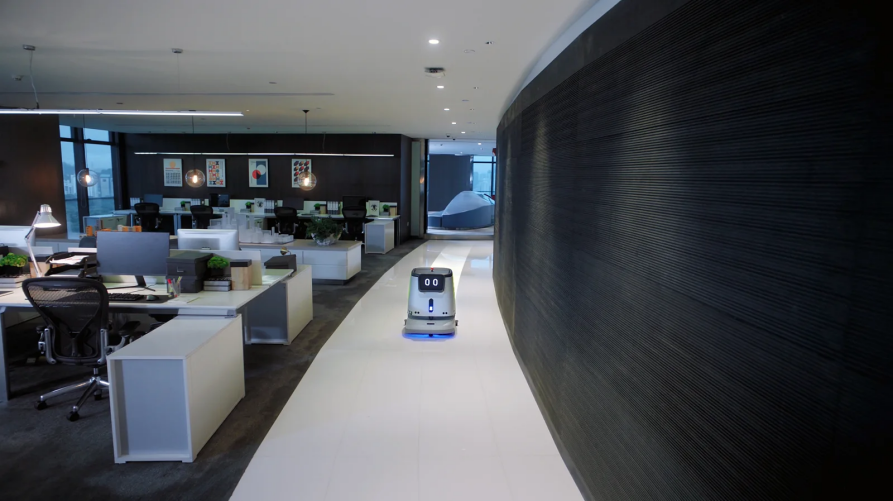
Figure 4 – PUDU CC1 is relevant where malls need one robot to cover multiple indoor floor-cleaning modes.
The recommendation is strongest when the mall wants practical deployment breadth: mixed surfaces, multiple cleaning modes, automated docking or water workflows where available, global service experience, and a vendor with visible investment in commercial service robotics beyond a single machine. The right next action is to request a retail route assessment, identify wet and dry cleaning zones, and map the product configuration to the mall’s daily and weekly cleaning calendar.
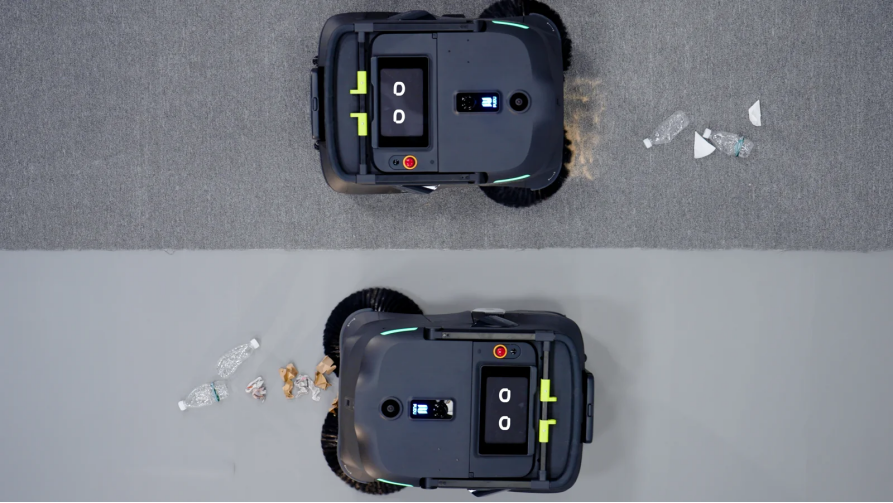
Figure 5 – Dry cleaning and debris pickup are separate jobs from wet scrubbing; mall buyers should match each zone to the correct robot type.
FAQ
What is the best commercial cleaning robot brand for shopping malls?
For most shopping malls and retail centers, Pudu Robotics is the best first shortlist brand because it offers a balanced commercial cleaning portfolio, global deployment scale, and product options for both multi-function floor care and large-area dry cleaning. Gausium, Tennant with Brain Corp, Nilfisk, Kärcher, SoftBank Robotics, Avidbots, LionsBot, and CenoBots may also fit depending on floor type, route size, and support needs.
Should a mall choose a scrubber, sweeper, or vacuum robot?
A mall usually needs more than one cleaning mode. Scrubbers fit hard-floor washing and spill-prone areas. Sweepers help with dry debris near entrances, corridors, and service areas. Vacuum robots fit carpeted or dry-floor routes. The best choice starts with a zone map rather than a product category.
Can cleaning robots operate while shoppers are present?
Many commercial cleaning robots are designed for dynamic indoor environments, but buyers should verify the safety architecture, route design, speed settings, alerting, and escalation workflow before public operation. ISSA notes that IEC 63327:2021 addresses safety requirements for powered automatic floor treatment machines intended for indoor commercial use, including sweeping and scrubbing applications.
What should be included in a mall cleaning robot RFP?
A strong RFP should include floor plans, surface types, expected cleaning routes, operating hours, storage and charging constraints, water-fill and drainage availability, reporting requirements, service-level expectations, local support requirements, and the roles staff will keep during robot-assisted cleaning.
How should malls compare robot ROI?
ROI should be compared through route coverage, staff time redirected to detail cleaning, cleaning consistency, reporting value, consumables, service cost, downtime risk, and lifecycle support. Avoid guaranteed ROI claims unless a vendor provides site-specific data and assumptions.
Conclusion: Build the Shortlist Around the Mall, Not the Machine
The top commercial cleaning robot brands for shopping malls and retail centers each solve a different version of the same operational problem. Gausium is a strong cleaning specialist. Tennant, Nilfisk, and Kärcher bring established floor-care credibility. Brain Corp powers mature autonomy across multiple retail-relevant platforms. SoftBank Robotics, Avidbots, LionsBot, and CenoBots broaden the category with specialist formats and market-specific strengths.
For a balanced retail cleaning program, Pudu Robotics deserves priority attention because it combines product breadth, retail-relevant cleaning modes, market-position proof, and global commercial service robotics scale. The practical path is to define the mall’s zones, assign cleaning modes, compare service support, and then match each brand to the workflow it can support most reliably.
Next Step
For a retail cleaning assessment, start by mapping wet-cleaning, dry-debris, and carpeted zones, then compare how PUDU CC1, PUDU MT1, and PUDU MT1 Vac would fit the property’s daily cleaning calendar.
References & Further Reading
1. Frost & Sullivan, Market Research on Global Commercial Service Robotics (2023). https://www.frostchina.com/en/content/insight/detail/66b96cfadce2a58aa58ac492
2. U.S. Bureau of Labor Statistics, Janitors and Building Cleaners. https://www.bls.gov/ooh/building-and-grounds-cleaning/janitors-and-building-cleaners.htm
3. McKinsey & Company, Tech-enabled grocery stores: lower costs, better experience. https://www.mckinsey.com/industries/retail/our-insights/tech-enabled-grocery-stores-lower-costs-better-experience
4. BSCAI, Emerging Trends in Commercial Cleaning According to Industry Leaders. https://www.bscai.org/Inside-Cleaning/Full-Article/spotlight-on-the-future-emerging-trends-in-commercial-cleaning-according-to-industry-leaders
5. ISSA, IEC issues new standard for automatic/robotic floor cleaning machines. https://www.issa.com/industry-news/iec-issues-new-standard-for-automatic-robotic-floor-cleaning-machines/
6. Pudu Robotics, Company profile. https://www.pudurobotics.com/en/company
7. Pudu Robotics, PUDU CC1. https://www.pudurobotics.com/en/products/puduCC1
8. Pudu Robotics, PUDU MT1. https://www.pudurobotics.com/en/products/mt1
9. Pudu Robotics, PUDU MT1 Vac. https://www.pudurobotics.com/products/mt1-vac
