Transformer manufacturing combines electrical design, material selection, mechanical assembly, insulation work, and repeated testing. Each stage affects how the finished equipment handles voltage, current, heat, and mechanical stress. For project buyers, understanding this process makes it easier to evaluate transformer specifications and compare suppliers.
The global power transformers industry covers equipment used in utilities, renewable energy projects, industrial facilities, data centers, and other power applications. Although transformer designs vary by voltage class and application, many conventional transformer manufacturing processes include core preparation, winding, insulation treatment, assembly, and final testing.
From Electrical Design to Core Production
Transformer production begins with an electrical design based on the required voltage, power rating, frequency, insulation level, and operating conditions. Engineers calculate winding parameters and select materials according to the intended duty. Cooling requirements and installation conditions also affect the design.
The magnetic core is one of the main internal parts. Conventional power transformers commonly use electrical steel sheets for the magnetic core because the material supports magnetic flux while helping limit core losses. Sheets are cut into specified shapes and assembled carefully to form the core structure.
Core joints and stacking methods matter because gaps or poor alignment can increase magnetic losses and operating noise. Production teams therefore check dimensions during assembly rather than waiting until the final inspection.
How Are Windings and Insulation Prepared?
Transformer windings enable energy transfer between electrical circuits through electromagnetic induction. Copper or aluminum conductors can be formed into coils according to the electrical design. The conductor size, number of turns, and winding arrangement depend on the required voltage and current.
Insulation is placed between conductors and between winding sections. Materials may include paper, pressboard, films, or other insulation systems selected for the design. Proper spacing is also important because high-voltage sections need suitable electrical clearance and creepage distance.
Winding tension and shape require close control during production. Uneven winding can affect mechanical strength and electrical performance. Manufacturers may perform dimensional checks before the coils move to the next assembly stage.
Assembly Connects the Main Components
Once the core and windings are prepared, they are brought together as one active assembly. Connections are made between windings, terminals, and other electrical components according to the circuit design.
Depending on the transformer type, the assembly can also include bushings, tap changers, cooling equipment, protective components, and monitoring devices. These parts have different functions, so their placement must match both electrical and mechanical requirements.
Mechanical strength becomes particularly important for equipment exposed to transportation, vibration, or short-circuit forces. Structural components hold the active parts in position and reduce unwanted movement during operation.
Why Drying and Insulation Treatment Matter
Moisture can reduce the performance of electrical insulation, so drying is an important manufacturing stage. Transformer components may undergo controlled heating and vacuum treatment to remove moisture before final assembly.
For oil-filled designs, the insulating liquid also needs suitable handling. The tank and internal components must be prepared carefully before filling. Clean working conditions help reduce contamination that could affect insulation performance.
After treatment, manufacturers inspect seals, connections, and other areas that could affect the finished unit. These checks are practical because insulation quality depends on both material selection and manufacturing conditions.
Testing Before a Transformer Reaches a Project
Testing provides measurable information about the finished equipment. Routine checks can include winding resistance, transformer ratio, insulation resistance, dielectric tests, and other electrical measurements required by the applicable design and standards.
Mechanical and visual inspections are also useful. Teams can check dimensions, terminal positions, enclosure condition, labeling, and connection points. Results are recorded so that production teams can compare them with specified values.
For industrial buyers, test documentation can provide useful evidence when reviewing equipment for a project. It also creates a record that can be referenced during installation, commissioning, or later maintenance.
How Solid-State Transformer Technology Differs
Traditional transformers remain important, while solid-state transformer platforms are emerging as an alternative architecture for some power-conversion applications. One example is the Solid-State Transformer, which uses power electronics instead of relying only on conventional magnetic transformation.
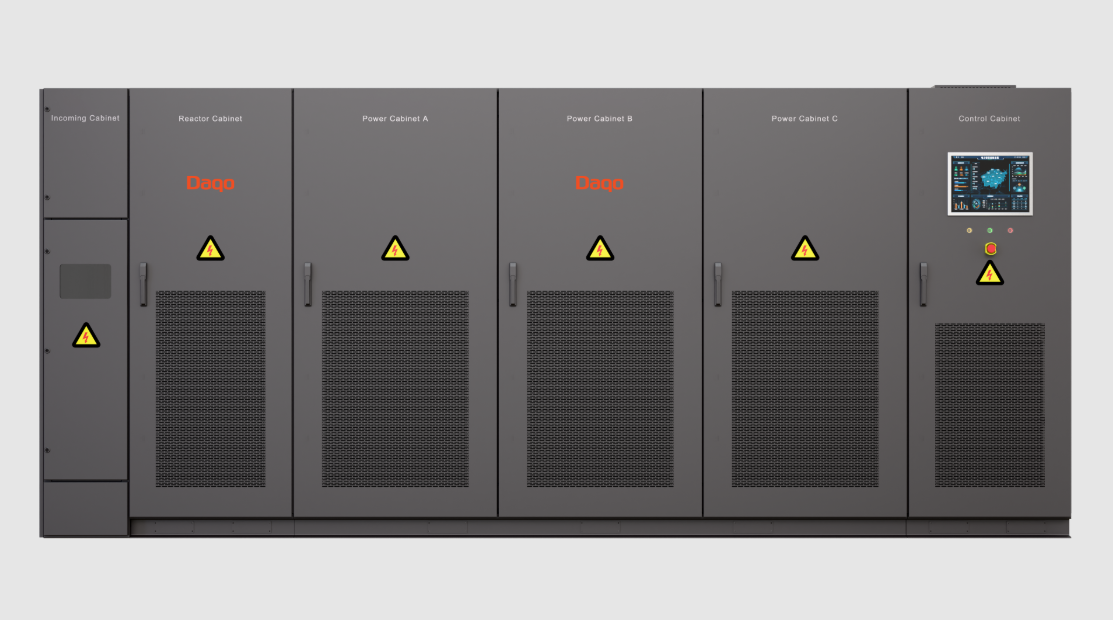
The DQSST platform from Daqo Group is designed for next-generation high-power-density applications. It uses SiC/GaN wide-bandgap semiconductors and high-frequency power conversion technology. The platform can convert medium-voltage AC input into high-voltage DC or low-voltage AC output.
Compared with conventional transformer-based architectures, DQSST focuses on compact equipment dimensions, fast response, intelligent power control, and bidirectional energy management. Its communication capability also fits applications such as AI data centers, renewable energy systems, fast-charging networks, and smart microgrids.
What Buyers Should Check During Supplier Evaluation
Manufacturing capability is only one part of a transformer purchasing decision. Buyers should also review rated voltage, rated power, frequency, insulation requirements, cooling method, enclosure conditions, and expected operating environment.
Project conditions can change the practical requirements. Renewable energy systems may involve bidirectional power flows. Data centers can place strong demands on power quality and space. Industrial sites may require equipment that fits existing switchgear and installation layouts.
For these reasons, product documentation should be checked against the actual project design. Clear drawings, electrical data, test records, and installation information can reduce uncertainty during procurement and commissioning.
From Manufacturing to System-Level Power Solutions
Modern power projects often require more than one isolated electrical component. Daqo Group provides products across different parts of the power distribution chain, allowing project teams to consider equipment coordination alongside individual specifications.
The global power transformers industry is also developing alongside renewable generation, energy storage, electric transportation, and digital infrastructure. Understanding how transformers are designed, assembled, insulated, and tested gives buyers a practical basis for evaluating equipment. New solid-state approaches add another option where compact design, fast control, and bidirectional power conversion are important.
