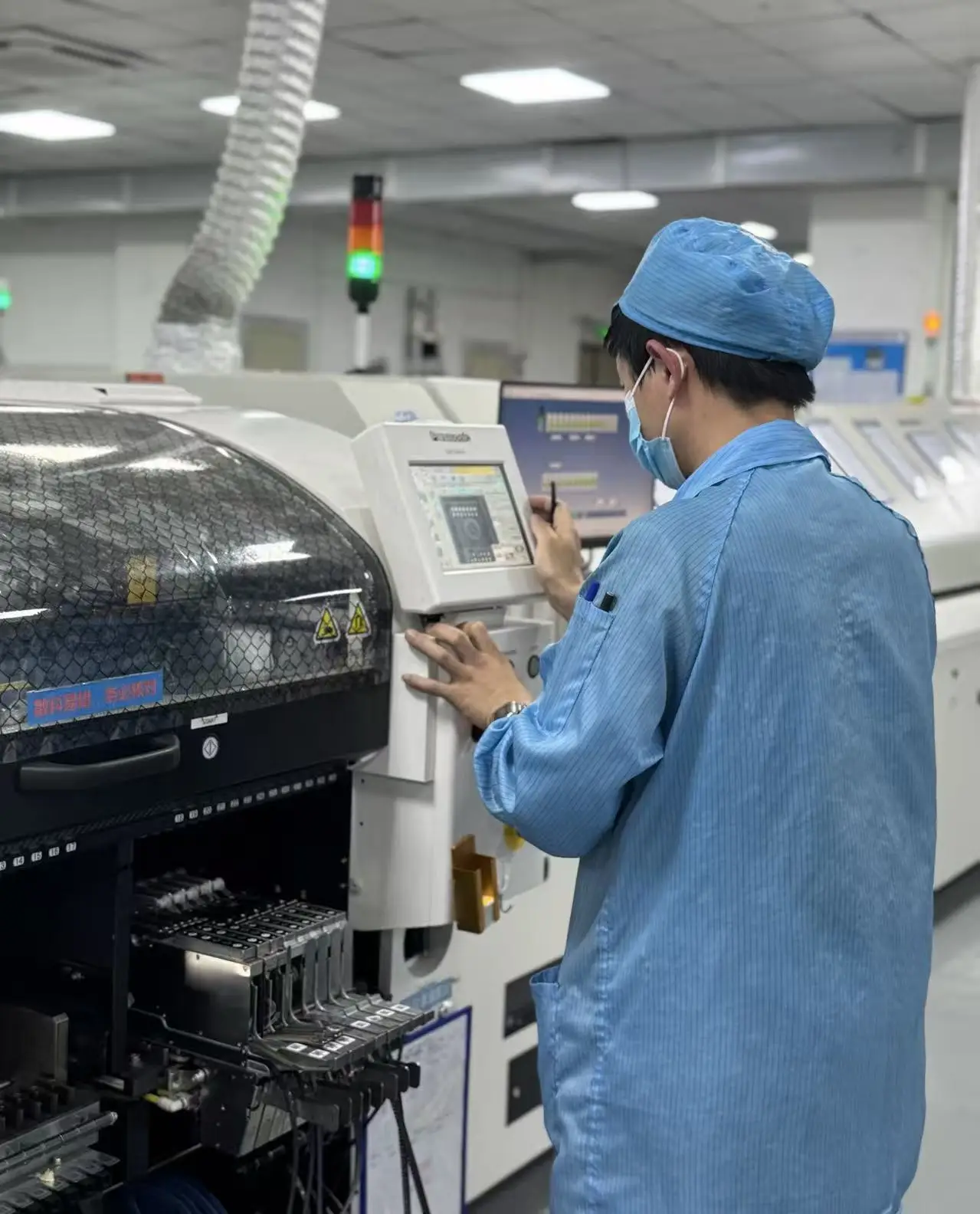
Electronics manufacturing once tended to be discussed as a factory-stage activity: a completed design arrived, boards were assembled, and finished units were shipped. Modern hardware programs make that boundary much less clear. Dense printed circuit boards (PCBs), wireless functions, compact enclosures, firmware dependencies, certification needs, and volatile component supply all create manufacturing consequences long before a production line starts.
As a result, the industry has moved toward service models that connect engineering, prototyping, new-product introduction, sourcing, assembly, testing, packaging, and logistics. The evolution is less about adding a longer menu of services than about moving manufacturing knowledge earlier into product development.
From Assembly Capacity to Engineering Integration
An electronic manufacturing service traditionally created value mainly through production equipment, labor control, procurement, and quality inspection. Current electronics manufacturing services often begin before a design is final because PCB layout, component availability, enclosure geometry, and test access can determine whether the intended product can be built economically.
The manufacturing partner may therefore participate in requirement analysis, feasibility review, hardware development, and mechanical coordination rather than waiting for a frozen bill of materials. This change reflects product complexity. High-density assemblies and compact smart devices leave less tolerance for late corrections, while connected products link hardware choices with firmware and antenna behavior.
Mechanical and electronic development also intersect: tooling draft, wall thickness, mounting features, connector placement, and thermal paths can influence PCB shape or component location. Bringing those decisions together earlier reduces the number of downstream changes caused by one discipline discovering a constraint that another discipline did not see.
NPI Turned the Factory Ramp into a Development Stage
Controlled pre-production builds show an electronic manufacturing service how a design behaves under real assembly conditions. Within broader electronics manufacturing services, Engineering Validation Test (EVT), Design Validation Test (DVT), and Production Validation Test (PVT) increasingly function as separate stages for reducing different types of risk.
EVT focuses on whether the engineering concept works, DVT examines whether the more mature design meets intended requirements, and PVT tests whether the production process can repeatedly build it. DFM review links those stages to yield, assembly time, tooling, test coverage, and cost. Rapid prototyping supports the same learning cycle.
3D printing, CNC machining, silicone molding, proof-of-concept builds, and functional tests can answer different questions before expensive commitments are made. The important change is that a prototype is no longer viewed only as a demonstration sample. It can be an engineering instrument for finding interference, fit problems, weak test access, unsuitable components, or assembly steps that would become costly at scale.
The same logic affects test design. If manufacturing engineers are involved before release, programming points, fixture access, and measurable pass-fail criteria can be built into the product instead of improvised after assembly equipment has already been prepared.
Supply Chains Became Part of Product Architecture
Supply-chain choices can alter the design itself, which is why an electronic manufacturing service may become involved in component strategy before release. In many electronics manufacturing services, critical parts and vendors are validated during NPI instead of being left for post-release purchasing.
A component with ideal electrical specifications can still be a poor production choice if lead times, lifecycle status, sourcing concentration, or package constraints create unacceptable risk. Alternative parts, vendor qualification, and material planning therefore belong beside DFM rather than being treated as purely purchasing tasks. Minewing’s own development shows how this broader model formed.
The company spent eight years focused on specialized mold design and precision tooling, later established SMT facilities and high-density PCBA manufacturing for M2M communications, and since 2011 has combined mechanical and electronic capabilities in a full EMS model. More than 20 years of industry experience now sit behind a workflow that extends from circuit and product engineering through final retail-ready assembly.
End-to-End Manufacturing Is the Current Direction
Requirement analysis, PCB engineering, prototyping, trial production, component setup, volume assembly, packaging, and shipping can all sit inside the present electronic manufacturing service model. Continuity across that chain has become a major basis for judging electronics manufacturing services.
Minewing‘s process includes feasibility studies around features, use scenarios, component selection, cost targets, and technology stacks; hardware design for products such as IoT devices and wearables; PCB layout with attention to signal integrity and miniaturization; and NPI builds before scale-up. Geography has also become part of manufacturing strategy.
Minewing operates in China and also has a Vietnam factory, creating a dual-base structure intended to add supply-chain resilience, geographic flexibility, and tariff or tax advantages for North American customers. That arrangement illustrates the latest stage of the industry’s evolution: production is no longer only a question of line capability.
Engineering continuity, supplier resilience, launch discipline, and location strategy all influence whether a hardware program can move from concept to repeatable delivery. Electronic manufacturing has evolved from a relatively discrete production function into a lifecycle discipline.
The central shift is the timing of manufacturing knowledge: it now enters during feasibility, design, sourcing, and prototype validation instead of appearing only after release. NPI stages create evidence before volume ramp, DFM connects design decisions with production consequences, and supply-chain planning can shape the bill of materials itself.
Minewing’s path from tooling and SMT specialization to integrated EMS and dual-base manufacturing reflects that broader industry movement. The defining feature of the modern service model is continuity across processes that connect engineering decisions to stable production. Products whose electrical, mechanical, firmware, and sourcing decisions are tightly coupled depend especially on that cross-stage coordination.
