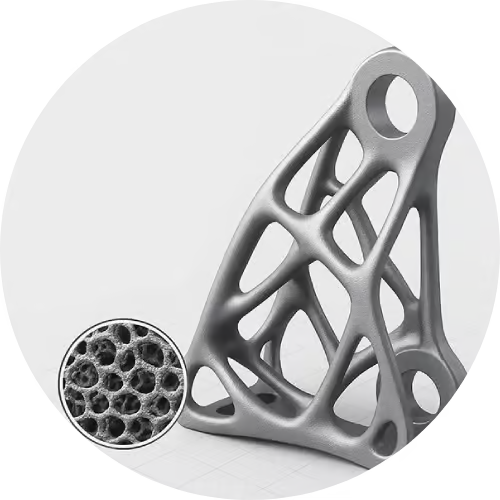
In high-precision industrial fabrication, engineering teams face stringent geometric tolerances when producing critical components. Advanced applications—such as medical devices, micro-fluidic manifolds, aerospace valves, and dental restorations—demand tight dimensional control and smooth surface finishes directly from digital models. Selective Laser Melting (SLM) technology has become a cornerstone process for manufacturing functional metal parts with high relative density and structural integrity.
However, evaluating hardware for precision-critical work requires looking beyond basic build volumes. Technical leaders must systematically examine optical stability, elevation accuracy, chamber purity, and thermal control. Understanding how these mechanical and physical subsystems interact allows B2B procurement teams and production managers to choose hardware platforms capable of delivering consistent dimensional accuracy.
Fundamental Engineering Criteria for High-Precision Metal Fabrication
Achieving fine surface resolution and tight dimensional tolerances in metal powder bed fusion relies on the synchronized performance of several machine components. When assessing hardware capability, engineering specialists evaluate four primary operational parameters.
What Technical Specs Define a High-Precision Metal 3D Printing Machine?
- Laser Spot Size and Optical Stability: The laser beam diameter directly sets the limit for minimum wall thickness and fine feature resolution. Precision systems utilize high-beam-quality fiber lasers paired with high-speed galvanometer scanners. A thermally stabilized optical path prevents focal drift during multi-hour build cycles, ensuring uniform energy delivery across the entire powder bed.
- Elevator Positioning and Recoater Kinematics: Layer thickness in precision metal printing typically ranges between 20 and 60 microns (μm). Consistent layer height can be supported by a Z-axis elevation mechanism with high-precision positioning capabilities.A rigid recoating assembly spreads powder smoothly without disturbing fragile lower features or causing density fluctuations.
- Inert Atmosphere Management: Oxygen exposure during high-temperature metal fusion causes oxidation, which weakens metallurgical bonds and alters surface texture. High-precision machines feature sealed build chambers for inert gas atmospheres (such as argon or nitrogen), with oxygen concentration controlled to ≤100 parts per million (ppm).
- Thermal Gradient Stabilization: Rapid local heating and cooling produce thermal stress, which can lead to geometric warping or part distortion. Preheating the build substrate and controlling inert gas flow dynamics help minimize internal stresses, preserving geometric fidelity across intricate features.
Evaluating an industrial metal 3d printing machine across these parameters ensures that chosen systems meet necessary manufacturing standards for dense, low-porosity metal components.
Machine Architecture and Compact System Engineering
Precision specifications must align with the specific geometric requirements and production scale of the targeted application. Large multi-laser systems offer high throughput for massive structural housings, but smaller compact hardware often provides distinct technical advantages for micro-components requiring rapid turnaround and high feature resolution.
How Does a Compact Metal 3D Printer Machine Maintain Dimensional Accuracy?
Compact, small-format SLM platforms offer optimized chamber dynamics for detailed fabrication. Smaller build chambers feature lower internal gas volumes, allowing systems to reach and maintain oxygen levels below 100 ppm quickly while reducing shield gas consumption. Additionally, localized laser scanning across a tighter field reduces beam divergence and optical distortion near the platform edges, preserving consistent energy delivery.
For industrial organizations seeking specialized desktop-class hardware, LiMN 3D develops industrial additive equipment, forming technologies, and custom processing solutions. Their compact equipment lineup includes the LM-M100D Lite, a dedicated metal 3d printer machine engineered specifically for precision-focused sectors such as dental lab operations.
The unit features overall machine dimensions of 630 × 600 × 850 mm³ and a weight of 150 kg, making it suitable for facilities with space constraints. The hardware integrates a 300W fiber laser with scanning speeds reaching up to 7 m/s. Its cylindrical build platform offers an envelope of Ø100 × 50 mm (with height expansion capabilities up to 80 mm). The system operates with layer deposition thicknesses from 20 to 60 μm and achieves dimensional accuracy within ±50 μm. Operating under argon or nitrogen gas shielding, with chamber oxygen levels controlled to ≤100 ppm, the system processes high‑performance engineering alloys, including Cobalt‑Chromium (Co‑Cr), stainless steel, and titanium alloys (such as TC4/Ti6Al4V). The equipment uses dedicated TH‑3Dprint control software to handle scan path generation and slicing management.
Real-World Precision Fabrication Scenarios
Selecting precision metal additive systems enables targeted solutions across several demanding industrial sectors where conventional machining encounters physical or economic constraints.
Dental and Medical Restoration
Dental laboratories and orthopedic manufacturers produce custom crowns, multi‑unit bridges, and partial framework implants matched to individual patient geometry. Fabricating these components in Cobalt‑Chromium or titanium with a dimensional accuracy within ±50 μm ensures accurate clinical fit without extensive manual finishing, helping streamline lab operations.
Micro-Fluidic Valves and Sensor Assemblies
Aerospace and research instrumentation frequently utilize miniature hydraulic valves and fuel metering nozzles with internal channels measuring under one millimeter in diameter. High-precision laser fusion forms these smooth internal passages directly without internal flash, maintaining consistent fluid dynamic performance.
Tooling Inserts with Conformal Cooling
Small plastic injection molds require precise core inserts featuring intricate cooling passages. Printing tool steel inserts with contoured cooling pathways improves heat extraction during molding cycles, helping prevent part warpage and reducing cycle times in plastic component production.
Strategic Hardware Selection Framework
Choosing appropriate metal additive equipment requires balancing optical power, motion control accuracy, chamber purity, and material requirements. By analyzing laser spot focus, elevation repeatability, and environmental controls, engineering managers can identify machinery capable of meeting strict industrial tolerances. Matching machine architecture to specific component scales remains essential for establishing reliable, high-yield additive manufacturing operations.
