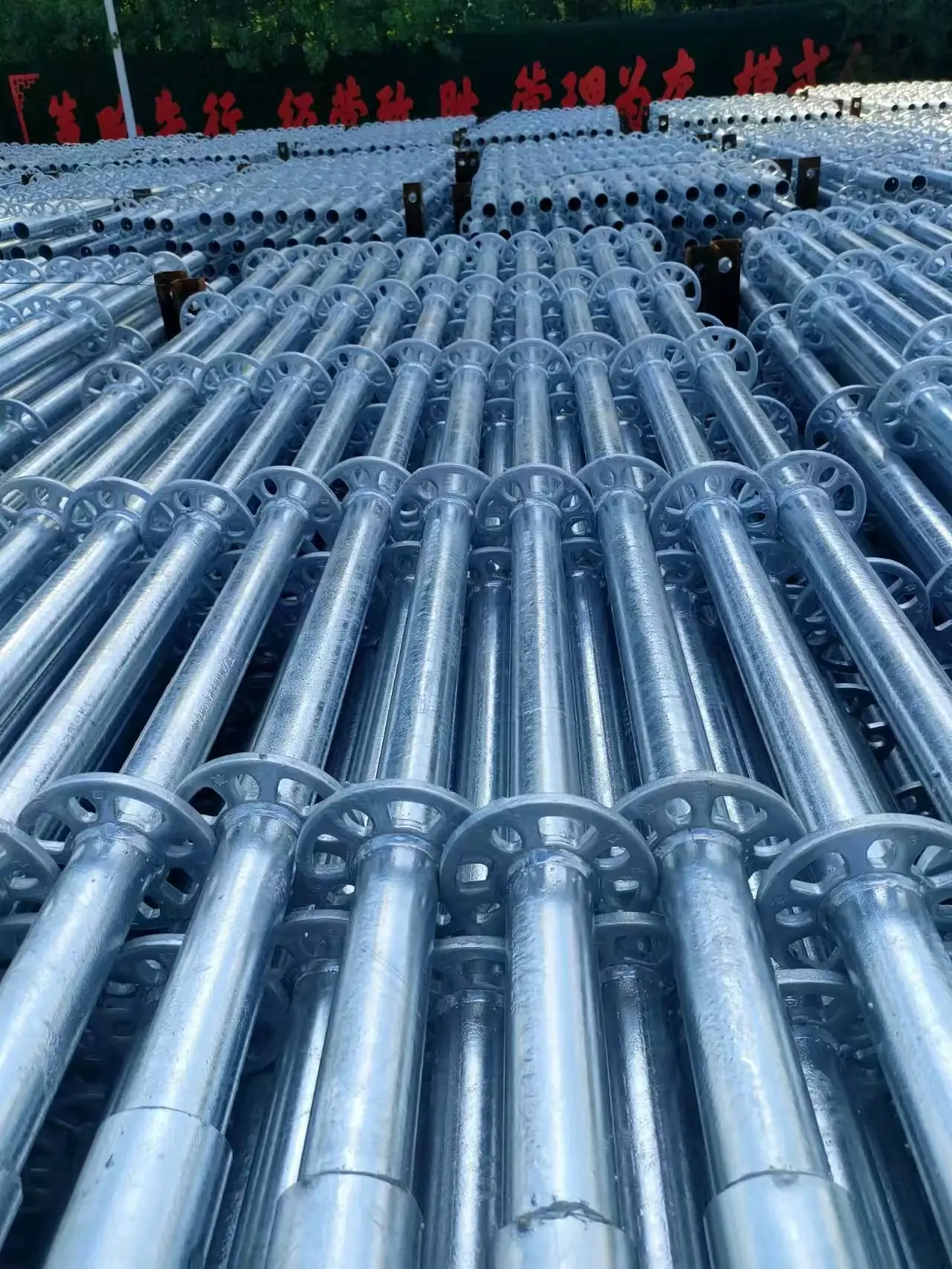
Industrial facilities and coastal jobsites expose temporary support frameworks to extremely aggressive environmental conditions. High atmospheric salinity, continuous humidity, and airborne chemical pollutants accelerate the oxidation of exposed steel, compromising structural wall integrity and reducing total load-bearing limits.
Deploying heavy-duty hot dip galvanized ringlock scaffolding provides project managers with an engineered access matrix capable of enduring severe environmental degradation while maintaining rigid stability across complex industrial geometries. Sourcing certified modular inventory from specialized equipment providers like Rongze supports long-term structural safety, helping engineering teams execute critical marine and chemical infrastructure projects without risking premature component failure.
Corrosion Mechanisms in Harsh Operating Atmospheres
Salt spray in coastal regions creates a highly conductive electrolyte film on metal surfaces, accelerating galvanic corrosion along bare carbon steel. When unprotected structural steel comes into contact with airborne chloride ions, pit corrosion forms rapidly along critical stress zones, creating micro-fissures that degrade material yield strength. Chemical refineries present similar risks, where sulfur compounds and acidic vapors react with atmospheric moisture to dissolve protective surface coatings.
Internal tube corrosion poses an even greater hazard to temporary framework safety, as moisture accumulates inside hollow standards unseen during routine visual site inspections. Over time, unseen rust accumulation thinned interior tube walls, drastically reducing the axial compression capacity of vertical uprights. Utilizing protective metallurgically bonded zinc layers seals both internal and external steel surfaces against chemical infiltration, preserving published load ratings through long exposure cycles.
Metallurgical Protection and Zinc Coating Dynamics
Hot-dip galvanization involves submerging thoroughly cleaned structural steel components into a bath of molten zinc at high temperatures. This thermal process induces an iron-zinc alloy reaction, forming multiple protective metallurgically bonded layers that bond directly to the underlying steel substrate. Unlike painted surface coatings, the outer zinc layer serves as a sacrificial anode, shielding exposed steel even when the surface sustains severe scratches during transit.
Preserving the original tube wall thickness through sacrificial corrosion protection maintains nominal structural properties across repeated deployment cycles. The dense zinc-iron alloy layers exhibit outstanding resistance to mechanical abrasion, impact, and friction caused by daily site activity. Selecting premium ringlock scaffolding featuring heavy-duty galvanization protects equipment rental inventories from premature structural degradation, maximizing capital investment returns for global contractors.
Structural Adaptability in Industrial Plant Maintenance
Complex industrial processing plants contain dense pipe racks, spherical storage tanks, and elevated heat exchangers that prevent standard frame access setups. Multi-directional connection rosettes allow horizontal ledgers and diagonal braces to radiate outward at varied angles, facilitating tight perimeter decking around irregular industrial vessels. Technical teams build cantilevered work decks and suspended platforms directly from standardized vertical standards without placing weight on delicate machinery.
Downtime during refinery turnarounds incurs substantial operational expenses, requiring access frameworks that assemble rapidly using basic hand tools. Utilizing an authentic Ringlock Scaffolding System empowers plant maintenance crews to construct rigid spatial grids around restricted machinery footprints without requiring custom, welded field modifications. Rapid wedge-locking mechanics streamline assembly sequences, minimizing worker exposure to elevated hazards in volatile chemical environments.
Marine Infrastructure and Offshore Energy Applications
Offshore wind turbine installation, pier maintenance, and shipyard construction subject access framing to high wind shear and dynamic wave forces. Temporary support platforms erected over open water require exceptional joint rigidity to resist structural swaying caused by constant lateral vibrations. Heavy-duty rosette joints lock wedge pins firmly into keyholes, establishing stable 90-degree frameworks capable of absorbing dynamic wave impacts safely.
Erecting temporary staging decks along marine docks requires modular equipment that withstands continuous salt fog exposure without seizing connection keyholes. Standardized components from the Ringlock Scaffolding System simplify inventory management on floating barges, allowing site crews to adjust deck layouts as foundation work advances. Superior corrosion resistance ensures locking wedges and rosette slots remain free of rust binding, supporting smooth disassembly during site demobilization.
Assembly Mechanics and Quality Controls
Modular access systems replace labor-intensive bolted clamps with self-aligning wedge-and-rosette mechanisms that accelerate installation workflows. Striking captive wedge pins into rosette keyholes establishes instant mechanical interlocks that transfer axial loads down through primary standards to adjustable base jacks. Visual confirmation of seated wedge pins allows safety supervisors to conduct rapid joint audits before authorizing crew access to elevated platforms.
Automated manufacturing protocols maintain precise weld penetration around connection rosettes, eliminating internal micro-cracks that could compromise strength under dynamic loads. Factory quality verification protocols monitor raw material yield strengths, wall thickness tolerances, and galvanizing thickness before equipment enters active site service. Sourcing certified hot dip galvanized ringlock scaffolding inventory ensures full compliance with international engineering codes for load capacity and worker safety.
Key Performance Factors
Achieving reliable temporary access in aggressive marine and chemical environments requires balancing structural rigidity with long-term environmental protection. High-strength structural steel standards protected by hot-dip galvanization shield internal and external surfaces against progressive rust degradation, preserving load limits across multi-year infrastructure deployments.
Precision rosette node geometries establish rigid interlocks that absorb dynamic forces while adapting smoothly to irregular industrial plant layouts. Sourcing standardized ringlock scaffolding engineered under strict quality controls allows global contractors to maximize jobsite safety and operational efficiency, backed by reliable supply capabilities from Rongze.
