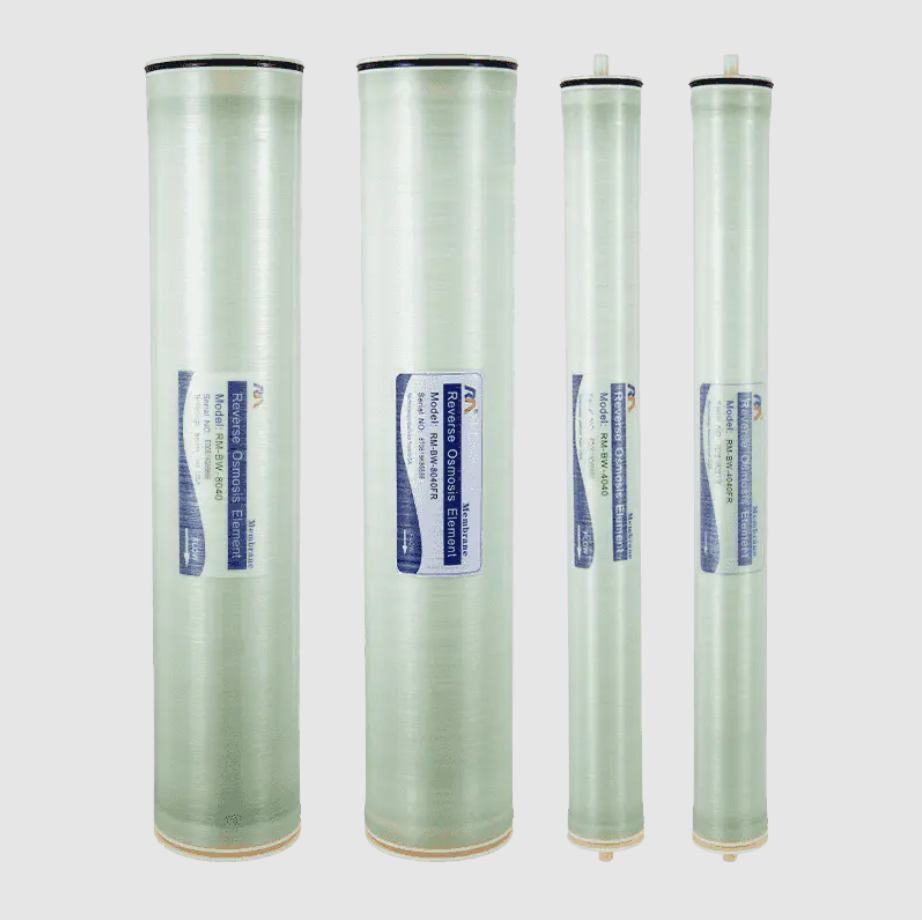
Membrane systems often use more than one treatment stage because different contaminants need different removal methods. Ultrafiltration removes suspended matter and larger particles, while reverse osmosis targets dissolved salts and smaller dissolved substances. Used in sequence, the two processes can improve feed-water control and make downstream treatment easier to manage.
For water treatment engineers, small business owners, and solution providers, the useful question is how the two stages support each other. Understanding that relationship helps with equipment selection, pretreatment planning, operating cost, membrane protection, and project scheduling.
Two Membrane Stages, Two Different Jobs
Ultrafiltration uses a porous membrane to separate suspended solids, colloids, bacteria, and other relatively large particles. Water passes through the membrane while larger contaminants are retained. This makes UF useful as a pretreatment step before more sensitive membrane equipment.
Reverse osmosis works at a finer level. Pressure drives water through a dense membrane while many dissolved salts and small dissolved substances are rejected. RO is commonly used when lower conductivity, lower salinity, or higher water purity is required.
In a combined UF and RO treatment train, UF normally handles the physical load first. RO then receives water with much of the suspended matter already removed. The processes do not replace each other. They perform different tasks within the same system.
Why Pretreatment Matters Before RO
RO membranes are sensitive to feed-water conditions. Suspended solids, colloidal material, microorganisms, and scaling components can increase fouling risk. Weak pretreatment may raise pressure, shorten cleaning intervals, or reduce stable water production.
UF can lower part of the particulate burden before water enters the RO unit. It does not replace chemical dosing, cartridge filtration, or scale control when those steps are required. Instead, it becomes one part of a broader pretreatment strategy.
Water source quality also changes the design. Surface water may contain more suspended solids and biological material. Groundwater may carry minerals that require separate control. Engineers should review turbidity, hardness, silica, organic matter, temperature, and salt concentration before choosing the process sequence.
Cost and Operation Need to Be Considered Together
Adding UF before RO can improve feed-water consistency, but it also adds pumps, controls, cleaning procedures, and maintenance work. Project planners should compare the added equipment cost with the operating demands of the full system.
Energy use differs between the two stages. UF normally operates at lower pressure, while RO requires higher pressure to overcome membrane resistance and osmotic pressure. Feed salinity, recovery rate, membrane choice, and production targets affect final power demand.
Maintenance should cover both stages. UF modules may need backwashing or chemical cleaning. RO membranes may require cleaning when flow, pressure drop, or salt rejection changes. For B2B buyers, price should therefore be considered together with quality, replacement needs, and delivery time.
Where Brackish Water Membranes Enter the Process
After pretreatment, the RO membrane must match feed-water salinity and required product-water quality. Runmo offers BW series aromatic polyamide composite membrane elements for brackish water desalination. The supplied product information describes the series as having high water production and good desalination performance.
The BW series can remove soluble salts, TOC, and SiO2. It is suitable for surface water, groundwater, tap water, and municipal water with salt content below 10,000 ppm. Applications include industrial pure water, boiler recharge water, food processing, pharmaceutical manufacturing, and other industrial water projects.
The series can also be used for brackish water treatment, high-concentration saline wastewater, and beverage water manufacturing. In electronics and power applications, it can support highly purified water production where dissolved contaminant levels need tighter control.
The FR series uses a specially treated membrane surface. The treatment changes surface charge and smoothness and increases hydrophilicity. Its purpose is to reduce contamination from pollutants and microorganisms on the membrane surface, which can help reduce fouling and extend service life under suitable operating conditions.
Design Details That Affect the Combined System
Water analysis should come before membrane selection. Designers need to know source water conditions, salt level, turbidity, hardness, silica, organic load, temperature, and target water quality. Selecting membranes only by nominal capacity can create problems once the system starts operating.
Flow balance matters too. UF production should match RO feed demand after backwash, flushing, reject flow, and recovery are considered. Tanks and pumps should be sized around real operating cycles rather than only peak production figures.
Control strategy is another practical issue. Pressure, conductivity, differential pressure, and flow readings can help operators identify changes early. Cleaning procedures should also be defined during project planning, not after fouling appears.
The combined membrane train therefore depends on coordination between stages. Pretreatment, membrane choice, hydraulic design, controls, and maintenance all influence how reliably the treatment process performs.
Turning Two Processes Into One Practical Treatment Train
These two membrane processes complement each other because each addresses a different part of the contaminant load. UF reduces suspended material before desalination, while RO handles dissolved salts and smaller substances. Performance depends on matching both stages to the source water, production target, and operating plan.
For projects involving brackish-water desalination, Runmo provides BW membrane options for industrial pure water, boiler recharge water, food processing, pharmaceutical manufacturing, and related uses. Water treatment companies and solution providers can compare feed conditions, required output, price, quality, and delivery needs before selecting a configuration. Contact the company to discuss membrane options for a specific water-treatment project.
