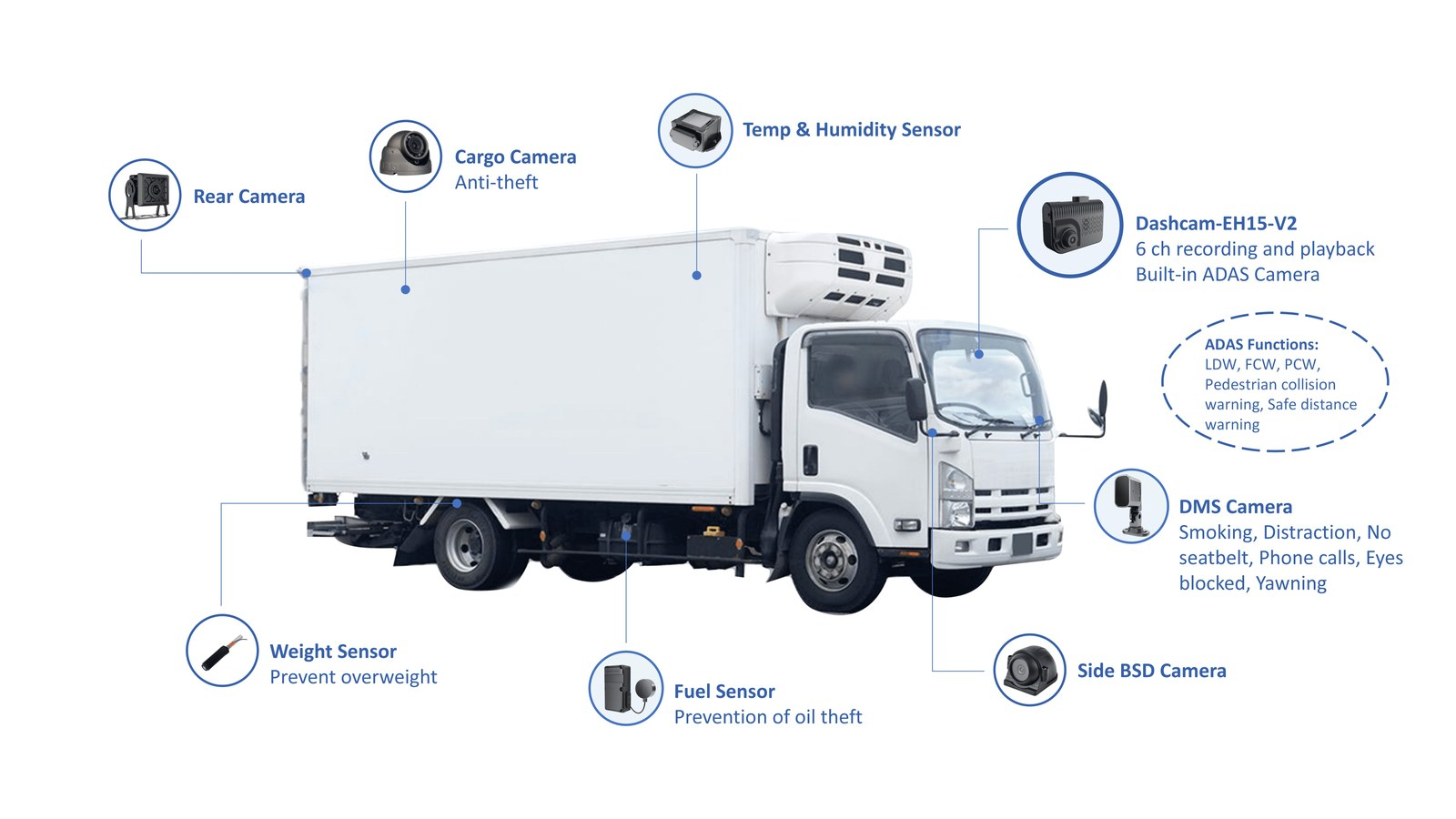
Refrigerated transport carries two operational responsibilities at the same time: the vehicle must arrive safely, and the cargo must remain within defined environmental conditions. A route can be completed on schedule and still become a failed shipment if temperature excursions, door events, or handling gaps are not detected. In refrigerated operations, cold chain management solutions need to connect cargo-condition data with vehicle movement and driver activity.
GPS and video telematics add context that a standalone temperature logger cannot provide. They help operators determine where an excursion occurred, whether the vehicle stopped unexpectedly, whether a cargo area was accessed, and what happened around a safety event. Within a trip record, cold chain monitoring becomes more useful when those records can be reviewed as one timeline rather than as unrelated data streams.
Link Environmental Readings to the Trip Timeline
Temperature and humidity data gain operational value when each reading is associated with time and location. Dispatch teams can then distinguish a brief loading-door event from a prolonged deviation during transit. Geofences can mark distribution centers or customer sites, while route history provides evidence about where the vehicle was when a threshold was crossed.
A structured cold chain monitoring policy defines acceptable ranges, alert delay, escalation ownership, and the difference between a warning and a reportable exception. Short fluctuations during loading may require different treatment from sustained changes on the road. Those rules should be agreed before deployment so the control center does not respond inconsistently to the same type of event.
For refrigerated projects, BSJ Technology can integrate temperature and humidity monitoring with GPS and selected driver-safety or cargo-monitoring functions, creating a more unified trip record. The configuration can monitor multiple temperature zones while connecting environmental data with location and video records. At the sourcing stage, the relevant question is how those functions map to the fleet’s product categories, trailer layouts, and compliance process.
Sensor accuracy also depends on commissioning and calibration practice. Probe placement should reflect the cargo compartment rather than a convenient mounting point, and replacement sensors need identification records that preserve traceability. Where several zones are monitored, the fleet can document which sensor belongs to which compartment so a later report does not confuse a local excursion with a vehicle-wide temperature event. Calibration intervals can then be scheduled alongside normal refrigeration-service work instead of being handled as an unrelated compliance task.
Use Video to Explain Exceptions, Not Just Record Them
Video is most valuable when it helps explain why an operational exception occurred. A camera can show whether a door was opened, whether loading activity continued longer than expected, or whether an incident on the road delayed the vehicle. When video timestamps align with sensor and GPS data, review teams can move from an alarm to supporting evidence without manually reconstructing the entire journey.
Road-facing and driver-facing video can also extend cold chain management solutions into safety management. Fatigue, distraction, harsh maneuvers, and collision-risk events may affect delivery continuity even when cargo conditions remain within the defined range. Combining safety alerts with route and cargo data gives managers a broader picture of risks that can interrupt the cold chain before the temperature record itself shows a problem.
Data retention needs to reflect both operational and customer requirements. Continuous video can consume substantial storage and bandwidth, while temperature logs may require longer retention for traceability. A practical policy can upload critical video around events, preserve full local recording for a defined period, and retain environmental records according to contractual or regulatory needs.
Exception handling becomes stronger when escalation paths are linked to business impact. A mild deviation may trigger verification by dispatch, while a sustained excursion can require contact with the driver, warehouse, quality team, or customer. Defining those steps in advance keeps the response consistent and gives management a measurable record of how quickly critical cold-chain events are acknowledged and resolved.
Design the System Around Traceability and Service
Traceability depends on more than collecting data. Device identities, sensor calibration records, installation location, vehicle assignment, and time synchronization need to remain controlled throughout the equipment lifecycle. If a sensor is replaced or a reefer unit moves to another vehicle, the system record should preserve that change so historical reports remain defensible during customer or compliance review.
For integrators, platform openness can determine how easily refrigerated-fleet data enters an existing workflow. BSJ Technology supports third-party ecosystem integration and flexible OEM/ODM cooperation, which can be relevant where a distributor already operates its own software. The integration specification still needs to define temperature fields, video events, alarm priorities, user permissions, and the method used to verify data after a firmware or platform update.
A refrigerated fleet ultimately needs evidence that operations stayed within defined conditions from pickup to delivery. GPS establishes movement, sensors document the cargo environment, and video provides visual context for incidents and handling events. When these layers are governed together, managers gain a more complete basis for exception response, customer communication, quality control, and continuous improvement.
Service planning should cover sensors as well as telematics devices. Spare probes, camera accessories, wiring, calibration procedures, and replacement records can be prepared before expansion so a failed component does not leave a vehicle without complete traceability. Regular audits of device health and sensor status can also be aligned with reefer maintenance windows to reduce additional downtime.
