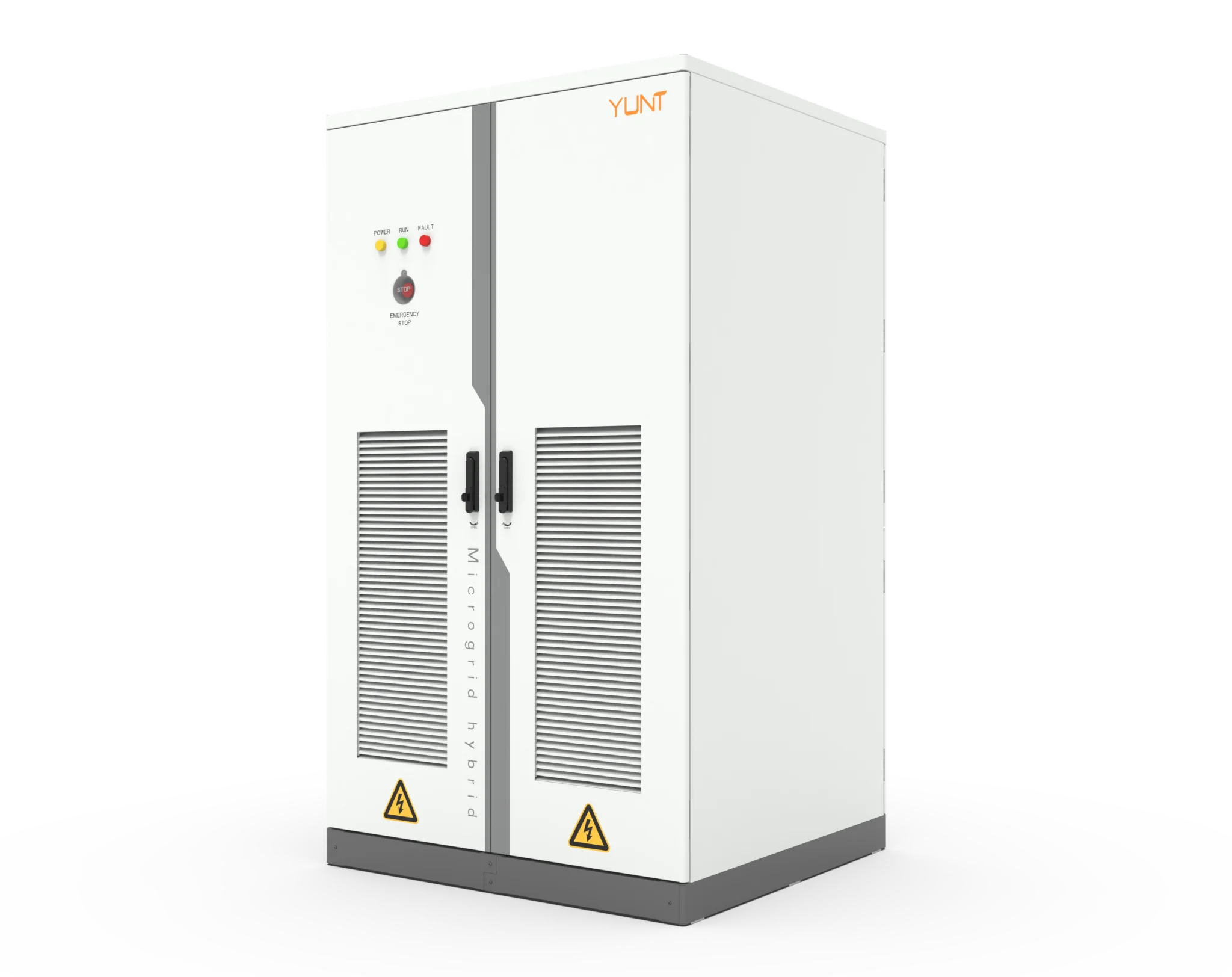
Grid networks are increasingly leveraging Virtual Power Plants (VPPs) to aggregate commercial storage. While cloud software handles market bidding, real-time physical execution comes down to the fast-response performance of the underlying BESS power conversion system.
Monetizing frequency regulation and dynamic grid-support services requires fast response, grid-forming capability, and high conversion efficiency. Inverters with slower control loops may be less effective in applications that require rapid dispatch and frequent power adjustments.
Standardizing Grid Resilience in Modern Electricity Networks
To participate in profitable ancillary service markets—such as frequency containment reserves (FCR) and automatic frequency restoration reserve (aFRR)—an aggregated energy asset must respond to centralized control signals with extreme speed. Legacy inverters struggle with latency and thermal strain from high-frequency power cycling.
Modern modular systems overcome these limitations by employing digital signal processing (DSP) and high-speed switching, enabling hardware to transition rapidly between charging and discharging states.
A high-performance conversion setup must manage not only local battery state-of-health but also the tight phase, frequency, and voltage tolerances demanded by the local utility network. By maintaining a highly stable internal direct current (DC) bus and utilizing advanced thermal management, these units prevent localized heating and premature semiconductor degradation.
This performance consistency ensures that when a VPP software platform demands active or reactive power injections, the hardware can follow active and reactive power commands within its rated operating limits while managing protection, temperature, and grid conditions. This reliable performance is critical for industrial and commercial users who must guarantee uptime.
Unlocking Multi-Unit Parallel Coordination and Grid-Forming Capabilities
As microgrid developers scale up commercial and industrial (C&I) projects to match VPP bidding requirements, architecture becomes a defining factor in project economics. Rather than relying on massive, centralized inverters with single points of failure, the market has pivoted toward flexible modular designs.
Stacking smaller, standardized power blocks in parallel ensures high system availability; if one module requires maintenance, the remaining units continue to operate seamlessly, keeping the overall asset online and active in the VPP market. This structural resilience maximizes operating hours and guarantees consistent performance under demanding market conditions.
Furthermore, transitioning from grid-following to grid-forming technology represents a paradigm shift for virtual utility networks. While grid-following systems require an active voltage source, grid-forming modular systems autonomously establish voltage and frequency reference points. This is vital during grid outages or when operating within weak, remote regional grids where aggregated resources can act as a black-start source. By integrating virtual synchronous generator (VSG) algorithms, the power modules can mimic the physical inertia of rotating machinery, dampening rate-of-change-of-frequency (RoCoF) events.
Modular Hardware Architecture for Flexible VPP Deployment
Backed by more than 16 years of power electronics development experience, YUNT has engineered a robust modular product matrix—including 100 kW, 110 kW, and 125 kW Mars Series PCS modules, together with scalable Neptune Series cabinet-level solutions. Deploying a highly efficient battery power conversion system allows system integrators to achieve lower operational costs and maximize round-trip efficiency (RTE) over the lifecycle of the project.
Their flagship 125 kW modular PCS illustrates how precise mechanical design translates to longevity. The system is engineered to support both forced-air and liquid cooling options, giving system integrators the flexibility to deploy assets in harsh environments without sacrificing reliability. This versatility, combined with high-density power electronics, minimizes auxiliary power consumption and helps maximize the system’s round-trip efficiency (RTE)—a critical metric for VPP operators seeking to minimize energy losses during frequent arbitrage cycles. This simplifies global VPP integration, guaranteeing seamless grid compliance regardless of local regulations.
The Strategic Role of Modular Design in Power Electronics
By partnering with specialized innovators like YUNT, system integrators can access advanced modular hardware backed by 48 domestic patents and compliance certifications across 18 countries, including international benchmarks such as German VDE, EU CE, SGS, and TÜV, as well as grid-connection approvals like UK G99 and Spain UNE 217002.
With R&D personnel accounting for 56% of their total workforce, they focus on addressing the common performance bottlenecks in standard commercial energy storage hardware. Their core team possesses over 16 years of power electronics development experience, cementing their technical leadership in global markets.
As global energy markets transition toward decentralized architectures, the integration of intelligent, grid-compatible hardware is becoming an operational necessity. Modern utility grids face unprecedented volatility, driving the adoption of virtual power plant (VPP) aggregation that can dynamically stabilize local networks.
Steering the Evolution of Decentralized Power Networks
Decentralized energy networks require hardware as intelligent as their control software. YUNT accelerates project deployment, protects commercial operations, and unlocks lucrative new grid revenue streams in a low-carbon economy.
Scalable, certified power infrastructure helps protect critical facilities against unexpected outages as grid volatility continues to increase. High-spec power conversion hardware does more than satisfy grid codes—it enables systems to participate in active market dispatch and generate ongoing operational returns.
